Showing posts with label Psychopathy. Show all posts

Sunday, 16 December 2012

The psychology of mass murder (a brief overview)

We Need to Talk About Kevin - 2011
In a sort-of update to my previous post, I thought I would briefly and tentatively dissect a minute aspect of a multi-layered problem: mass-murder. Much of my thoughts contained herein stem from this article, which talks about psychopathy. I don't believe there is any meaningful conversation to have regarding the link between mental illness and mass-murder, but perhaps by looking at what tenuous links there are, I might educate some people.

Another devastating mass-shooting has taken place in the United States, this time in Sandy Hook, Connecticut, one of the safest states in the country.


In amongst the usual liberal vs. conservative/libertarian arguments over gun-control, I've witnessed a gradual but steady rise in calls for bringing the discussion of mental illness to the table, to make it more "public", as though it were a dirty secret. This comes in the wake of reports that Adam Lanza, the perpetrator of the Sandy Hook shooting, purportedly had a form of autism, or was at the very least "socially awkward", a term often used to describe the kind of "lone, deranged killer" types we're accustomed to hearing about on the news.
The argument, then, is presumably that by raising awareness about mental illness, we can address the issue that REALLY matters, i.e. screening for the wealth of undiagnosed nut-cases stockpiling weapons all around us?

It's fair to say this argument is mostly put forward by conservatives wishing to steer the debate away from the issue of gun-control. This short but sweet response from DSM 5 contributor Dr. Frances sums up my feelings on the matter.

Nonetheless, a troubling and touching account was published today by a mother whose 13-year old son she feels exhibits strong signs of becoming a future Adam Lanza (her article is somewhat dramatically titled "I am Adam Lanza's mother"). She argues that
It's time for a meaningful, nation-wide conversation about mental health.
What would this conversation be about, in the context of mass-murder, and what outcome would it have? Could we screen for and prevent potential mass-murderers?

Firstly, I think it is important to note that a person with a diagnosis of mental illness is more likely to be a victim of violence rather than the perpetrator.

Secondly, there is not much in the way of literature on the psychology of mass murderers (discounting analyses of historical atrocities like genocide). Seeing as mass murders are relatively few and far between (despite what the media may have you believe), the best we have are case-studies conducted on high-profile individuals after the fact, such as the two perpetrators of the Columbine shootings. 
Eric Harris and Dylan Klebold, 18 and 17 respectively, have had their motives and minds analysed in a number of books and reports, some less reputable than others. Taking an aggregate of what I've read/heard over the years, the two shooters appear to fit the criteria for psychopathy, or at the very least narcissistic personality disorder.
The year before the massacre, Harris and Klebold had been caught breaking into a van. They avoided prosecution through a “diversion programme” involving counselling and community service. Each wrote a letter of apology, with Harris stressing his empathy for his victim: “I believe you felt a great deal of anger and disappointment.”
But Harris’ journals revealed his true feelings: “Isnt america supposed to be the land of the free? how come If im free, I cant deprive a stupid fucking dumbshit from his possessions If he leaves them sitting in the front seat of his fucking van out in plain sight and in the middle of fucking nowhere on a Frifuckingday night. NATURAL SELECTION. fucker should be shot (sic).”
Hence by joining a few dots in an unscientific way, we could conclude that psychopathy predicts mass-murder...
I doubt it would be the first time, and you might even say it's an obvious deduction, but it's worth remembering that there are a panoply of possible reasons for wanting to go out and kill people, some of which I'm sure we all secretly and shamefully share (bullying, vengeance etc.).
There is no crime of which I do not deem myself capable - Goethe, Johann Wolfgang Von, 1749 - 1832
Nonetheless, only a rare minority of us actually goes out and does it. Through the gradual medicalisation of human behaviour, Psychiatry has identified a key set of personality traits that taken together can potentially account for some of the extreme violent acts that the media loves to sensationalise: Psychopathy (often wrongly called Sociopathy in the media).

Ted Bundy
I'm not going to go into it here, but psychopathy is a controversial diagnosis (as are personality disorders in general) some people think it doesn't exist (it is after all a composite of traits from other personality disorders), others swear by Robert Hare's patented Psychopathy checklist.

Regardless, the construct has built up quite a hefty empirical basis over the years, and is very useful for describing and preempting some of the frighteningly manipulative and cold-blooded behaviour of violent people (friends of mine who have worked with such a population have quite the stories to tell).

We're now accustomed to hearing about men in their late 20s and 30s committing a spate of grizzly crimes, the psychopath tag being an easy fit. But what about relatively young (often male) perpetrators of cruel, violent acts? The conventional wisdom would be to hold off on a diagnosis and blame external influences (video games, music, etc.), assuming that youth equates with impressionability. The research is beginning to challenge this accepted wisdom.
“To me it seems a no-brainer,” says Essi Viding, professor of psychology at University College London. “Nobody’s going to get psychopathy as a present when they turn 18. Of course you’re going to see some precursors. 
Essi Viding is actually professor of Developmental Psychopathy at UCL, and the bulk of her research is dedicated to examining the early markers for later development of antisocial personality disorder, a component of adult psychopathy. Particularly strong markers are Callous-Unemotional traits (CU).
According to Paul Frick, who so named the Callous-Unemotional traits based on parents' descriptions of their children,
The difference between children with conduct disorders and this particular group lacking in empathy can be seen in two referrals that he recalls. Both had been cruel to animals. One child had shot and killed a cat in a tree, in a reckless attempt to get it down. The second had, little by little, cut pieces from a cat’s tail to see how it would respond.
Viewed in terms of severity, the first child is worse, having killed the cat, Frick says. But it is the dispa
ssionate cruelty of the second that indicates callous-unemotional traits.
I have to say, I find that second story particularly unsettling. It's worth noting however that only 2 to 4 percent of children have conduct disorders, and only a third of these display the aforementioned traits, so it is relatively rare. Here are the traits in full:
“One is lack of guilt. They just don’t seem to show remorse or guilt. A person doesn’t feel bad or guilty, unless they’re expressing guilt when they’re caught.
Second, a lack of empathy. They have a disregard for the feelings of others. Third, they are unconcerned about how well they do in their school work. And fourth, shallow and deficient affect. They don’t show emotions except if emotions will get them something. These kids are often described as cold.”
As alarming as these traits are, to start labelling children as psychopaths is problematic, as psychopathy has historically been seen as an untreatable illness, the only solution being preventative incarceration. An example of this can be seen when a murderer pleads insanity, thinking they'll spend a reduced sentence in a medical facility, ending up spending the rest of their life in a high-security institution like Broadmoor Hospital, due to a diagnosis of psychopathy.

Nonetheless, Professor Viding's research indicates that CU traits and Antisocial Behaviour (AB) are not only present in early childhood and predictive of adult psychopathy, but based on adoption and twin studies appears to have a strong genetic basis as well, particularly CU.

The CU and AB traits could well describe an Adam Lanza, or the Virginia Tech killer, and it is chilling to think that the signs arrive so early in life, even in the absence of bad parenting. In this regard, the film We Need to Talk About Kevin is remarkably perceptive in presenting an ambiguous account of a mother struggling with her CU child, feeling guilty for her suspiciousness and lack of emotional connection with Kevin, despite him being, in clinical parlance, a little shit. And when the titular Kevin commits the heinous acts his short life has been building up to, the ensuing community backlash towards the mother is all the more painful to watch.


I would argue that culturally, we assume children are born innocent and naive, becoming damaged or warped by whatever neglect and abuse they suffer over time. Viding's research would argue for a strong heritability of the C-U trait, which may then exhibit itself in early childhood. This contrasting image of a child essentially born "evil" is hard to swallow, as this article explains
It is clear that our growing understanding of callous-unemotional traits in children presents a massive challenge to schools: to accept that children can be without remorse or regard for others’ feelings
So are we to assume that these young, budding psychopaths are irreparably damaged goods, with close monitoring and eventual incarceration the only solution?

The added benefit of early identification is the opportunity for early intervention. As it happens there is already an intervention that claims to produce meaningful change in behaviour (if not in underlying psychology): positive reinforcement. This may come as a surprise, given the received wisdom:
Faced with some of the most serious misbehaviour, teachers and parents are asked not to reach for their most instinctive response: punishment.
Laura Warren is an educational psychologist who, like Frick, became frustrated that the methods she had been taught were increasingly failing on children with conduct disorders.
At the time, teachers would universally attribute bad behaviour to low self-esteem, she says. “What I was finding was that usually the children who were the most disruptive didn’t have low self-esteem. If anything, it was over-inflated. They thought they were fantastic. Overly high self- esteem is a bigger predictor of aggression than low self-esteem.”
A grandiose sense of self-worth is in fact one of the characteristic traits of adult psychopaths. Viding points to an anecdote from Robert Hare, a psychologist who developed one of the leading tests for psychopathy. He met a prisoner who insisted that he was going to swim for Canada in the Olympics, despite the disadvantages of being overweight, unfit and serving a life sentence.
 Hence, the need for a solution that plays into the interests of this rather unique population:
The programme, called Let’s Get Smart, replaces sanctions with rewards. Some teachers were uneasy. “Some teachers felt that punishment happens in the real world; if they misbehave in the real world they will still go to prison. Why are we setting them up for unrealistic expectations?” says Jones. “Our point is that it doesn’t work.”
By offering regular rewards, perhaps three times a day, controlled by the adult in authority, it aims to provide a rational, self-interested motivation for pleasing adults where that motive is emotionally absent. “The adult becomes the clear intermediary between the child and what the child wants,” Warren says. The rewards are tailored to each child’s interests.
These children often have a strong desire for control and teachers have to resist attempts to negotiate, because any concession just leads to more demands. “I teach parents and teachers to say, ‘It’s not open for discussion, go away.’ Adults don’t like to dismiss children,” Warren says.
All this is backed by role play and other exercises that are intended to build children’s capacity to pay attention to and respond appropriately to others’ emotions. Video playback helps the children to see their behaviour as others do, often to their surprise. (“I do swear a lot,” one girl told Warren.)
Promising, although the article describing this intervention points out that it took the children's' behaviour from being in the worst 99% to the 89th percentile. Additionally, as they rightly point out, the approach plays directly into the children's preponderance towards cold, rational self-interest (mini-economists, if you will), without attempting to change their underlying psychological make-up.
Still, it's positive to hear that something works at all, given that historically psychopathy has been considered untreatable.

To summarise, it would appear that psychopathy is rare, has a strong genetic component, and the signs can be detected early. What's more, leading researchers in the field are collaborating to develop and empirically support interventions that will help curb the cruel, calculating behaviour of psychopathic children. 
If awareness needs to be raised as has been suggested, it would be amongst schools, parents, and clinicians, so that any eventual programs tailored to the needs of such children could be introduced without the fear and hysteria that one might expect if we simply start labelling callous children as psychopaths.

So, regarding a "meaningful" conversation about mental health, it seems that if there is any connection to be made between mental illness and mass-murder, psychopathy is the best one we have, but it's a tenuous link at best.
As interesting and valuable as all of the research on psychopathy is, none of it links directly with mass murder. Equally, none of the interventions and measures I've discussed have anything to do with preventing mass-murder. As Dr. Frances explains
Psychiatry has no way of predicting or preventing rare and fairly random acts of senseless violence—it is simply impossible to find needles in haystacks. We must accept the fact that a small cohort of deranged and disaffected potential mass murderers will always exist undetected in our midst. The only questions are how often will these ticking time bombs go off and how much damage will they do when detonated.
As is hopefully clear, I decided in this post to focus on explaining the roots of psychopathy, in part because I read an article written by a mother whose young son she fears will become an Adam Lanza. I have a feeling her son may simply be displaying Callous-Unemotional traits (albeit severe ones), and by taking her jump in logic seriously, I hoped to show that no direct link actually exists between psychopathy and mass murder.

Mental illness is but one small component (if it is at all) of a complex and nuanced problem. Wanting to understanthe psychology of  extreme acts like mass-murder may help bring a sense of control in the midst of confusion and chaos, but ultimately it distracts from other, more worthy causal factors (like Adam Lanza's mother being a survivalist with a large gun collection, for example).

Saturday, 29 September 2012

Should mental health evaluations be required before the purchase of a fire-arm?


EDIT: This post was written hastily in response to something inflammatory posted on Facebook (isn't it always the case?) about the Aurora shootings. Please excuse errors and the gradual deterioration of my argument into a general anti-guns rant.

Regarding whether psych evaluations are necessary or indeed useful, I think we first have a to dispel a few myths and look at some data.

First of all is the way in which we psychologise extreme and disturbing acts that involve firearms, like mass murder. There's a great article here by a Cambridge Professor discussing how we tend to see Western murderers as lone, deranged individuals, but see non-Western murderers as acting on cultural influences (Islam, dictatorships, social deprivation etc.).
The reality in all cases West and East is it's a combination of many factors that we tend to ignore in favour of a simplistic analysis of motivations which helps us make some sense out of the chaos.

A recent Fox News article actually tried to blame failings in Psychiatry for not being able to properly understand and pre-emptively catch the aforementioned "lone deranged killers". Dr. Allen Frances, Chair of the Psychiatry department at Duke University and contributor to the upcoming DSM5 (the American bible of psychiatric illnesses) wrote an eloquent but pithy response to this kind of article explaining that we will never be able to find the needles in the haystack and we either need to accept Mass Murder as part of the American Way of Life, or we need to get in line with other industrialised nations and accept reasonable gun control laws.


Does that mean psych evaluations are useless? Not exactly. Up until now I've only been talking about mass shootings, which by default represent extreme exceptions in society, and sadly contribute to stigma and the false association between mental illness and violence.

The majority of murders in the US are overwhelmingly represented by firearms and are not carried out by mass murderers. Again, all these gun-related homicides aren't all caused by one type of person. It's certainly clear that most gun deaths happen in poor urban areas, and black teenagers appear to be most highly affected in terms of gun deaths, so that does help narrow down some of the social factors.
But from a purely psychological point of view, what lines can be drawn? We do know that a significant section of the criminal population may be suffering from mental illness (sometimes as a consequence of prison!). Furthermore, there is evidence that 64% of males and 50% of females in prison suffer from one form of personality disorder or another (in the UK), although the exact relationship between type of personality disorder and type of offence is unclear.


Additionally, we know that there is an association between violent offences and this narrow sub-set of psychiatric illness called personality disorders. Antisocial personality disorder is a fairly robust construct that can account for a lot of violent offending, and a recent large-scale study in Baltimore found that early disruptive behaviour and anti-social personality was predictive of later criminality (on the plus side, this was tempered by the introduction of a behaviour management program; remember season 4 of the The Wire?).

What I'm saying is that we're already well aware of some of the early signs and causal factors and there are (often under-funded) prevention programs in place to help avoid high-risk individuals from becoming violent, but again, it's a very complicated, multi-layered problem, and honestly, guns shouldn't have to be part of the equation.

Let's not forget though that guns don't just contribute to homicide rates; ready availability of guns in the household increase the risk of suicide in the home. Most states in the US actually ban the purchase of firearms for individuals who have a diagnosis of mental illness or have ever been hospitalised, but clearly it's not enough.

I don't know if mandatory psych evaluations would help or not, I do know that police have to take them before entering the force, and their gun is seen as an enormous responsibility, something that contrasts with my experience of walking into a Bass Pro shop in Oklahoma and seeing a large sign saying "Glock Giveaway!! 2 for 1!!".


I guess debates over mandatory screenings, and gun ownership in general relate to the wider notion of Isaiah Berlin's Positive and Negative Liberty.


Without going into too much detail, positive liberty represents the degree to which we have social representation (in other words, how democratic our society is), and negative liberty represents our ability to be left alone and do what we want, while still being held individually responsible for our actions (agency). Sir Berlin was more focused on negative liberty, as at the time the cold war had left the Western world feeling that any form of de-individualised mass movement could only lead to violent revolution.

I completely understand this concept and can largely agree, but in America the cultural history has strangely tied the notion of gun ownership tightly to this core principle of the Liberal conception of Freedom.

What provides a sense of agency about having a gun? Provided you're not a member of the Crips or the Bloods, you're probably a homeowner who feels that owning a weapon is a necessary part of home protection, leaving you and your family free to enjoy the fruits of liberty:


It's a well-known finding that, rather than confer protection, gun ownership increases the risk of homicide.

We don't have guns in the UK, or rather, we do have illegal guns in certain gangland areas near Manchester and London, but I've never seen one or been in a situation where I thought a gun might be necessary. Illegal guns are very difficult to come by as they are simply not manufactured and sold in a way that benefits the criminal underworld in Europe.

The police advise people in my neighbourhood that if someone breaks into your home, you should barricade yourself in one of the rooms of the house; intruders are mostly looking for stuff to steal, and that's covered by insurance. The best way to effectively deal with a violent situation is to get out of it. Charles Bronson most of us are not.

So as you can tell, I'm pro gun-control. I'm really anti-guns full stop, but I'm willing to meet halfway. Here's a study from Austria where guns are legal, comparing the homicide and suicide rates before and after the introduction of restrictive firearm legislation. The results speak for themselves.

And this cultural myth that America is simply a more historically violent nation and you simply can't compare it with other civilised nations? Need I remind you of Austria's history?

Thursday, 30 August 2012

The Imposter: Review (with as few spoilers as possible)


Early into Bart Layton's unsettling documentary, the filmmakers employ a striking gimmick that while initially jarring, ultimately helps elevate The Imposter from a good film to an excellent one.
The opening salvo is high-concept enough already: A stylish mixture of one-on-one interviews spliced with reconstruction footage details the tragic disappearance of 13-year old Texan Nicolas Barclay, culminating in the tantalising reveal that 3 years after vanishing without a trace, Nicolas has apparently resurfaced in Spain, traumatised and unable to speak.

Just as this preamble lets us settle into a seemingly conventional whodunnit, with a jolt the film is physically rewound: spooling past the interviews with teary-eyed family members, back past the reconstructions, we arrive once again at the opening credits. The film then starts anew, and as we re-watch the reconstructed footage of an unknown child hiding scared in a Spanish phone booth, an accented male voice chimes in, informing us of how he impersonated Nicolas Barclay, and of his expertise in manipulation.

This meta-narrative twist of rewinding the film we're watching is lifted wholesale from Michael Haneke's Funny Games, and benefits greatly from the comparison. Anything that references this scene is certainly going to create a deep sense of unease in anyone who recognises it. In an interview for Funny Games, Haneke explained that he constantly tries to give the viewer an out over the course of the film, so that if the audience persists beyond each narrative break, they have to bear the responsibility of their decision to do so.
Similarly, once we realise that the disembodied voice is none other than Frederic Bourdin, serial missing-child impersonator wanted by Interpol for many years, we are forced into a compromising position. The filmmakers have signaled to us that we are sharing company with an unreliable narrator: the eponymous Imposter. Right from the off we know something is deeply wrong, but we decide to go along for the ride regardless.

Frederic Bourdin

Then, of course, there's the voyeuristic pleasure of having Bourdin tell us what was really going on while doe-eyed clueless family members and FBI agents hopelessly try to piece together the events that characterise this truly bizarre story.

Profound creepiness notwithstanding, Bourdin turns out to be a gifted storyteller, hardly surprising given his honed ability to convince all those around him of the most unbelievable things. How else could a 23-year old Frenchman with dark hair and brown eyes convince a family and the FBI that he was a 15-year old blonde-haired blue-eyed teenager from Texas? It is a testament to his easy charm and ability that for the most part his story comes off as wholly believable.

Large portions of the film feature close-ups of Bourdin, now approaching 40, his face filling the screen with his coy, knowing smile, as he excitedly guides us through the twists and turns of this implausible story. Despite his disturbing sang froid, it is everyone around him who comes off looking bad by corroborating his claims; claims that would have most of us scoffing in disbelief.
The audience is essentially forced into judging the naive family and FBI for their lack of deductive awareness, rather than sympathising with what are essentially a group of easy "marks" who have been exploited by a master puppeteer.

Hence when Bourdin offers a sinister explanation of the family's unsettling eagerness to accept him as their missing son, we're ready to buy the theory that their naivete might have been a deception. Only later upon reflection does it become abundantly clear that if anyone in the film was being deceptive, it was surely Bourdin himself. It leaves the viewer uncertain as to whether Bourdin was ultimately spooked by the implausibility of his own situation and jumped to a dark conclusion, or whether he had in fact fooled the world once again.

As an invisible fly on the wall, the audience can feel safely distant from the intimate violation Bourdin's deception brings on his victims. The brilliant third act shatters this assumption. If I'm honest, for a good 10 minutes I bought the family's complicity hook, line, and sinker. I actually wanted Bourdin to be telling the truth. One way or another I had been fooled by a narcissistic psychopath drawing me into his ficitonal world. 
My unofficial diagnosing of Bourdin as a psychopath (often falsely termed sociopath) may seem initially hasty, but as someone who works in psychiatry it is difficult not to reach that conclusion.

Born to a rejecting mother and an absent father, Bourdin builds the image of a victimised orphan in search of parental love. Certainly, witnessing the nature of his crimes makes it clear that his pathology is very specific and even tragically relatable, but this does not preclude a concomitant personality disorder. He is at the very least a narcissist, and at worst, a classic psychopath according to Hare's checklist. This does nothing to reduce the complexity of his crime, nor does it ruin the incredible suspense the film generates in spades. For me, it helps reduce the ambiguity surrounding his story.

I think Bart Layton might have arrived at the same conclusion. The film begins with the only existing archive footage of the the real Nicolas Barclay. This short home video, filmed by Nicolas himself, actually bookends the film, and it becomes clear as Bourdin's voice-over is introduced that this footage was to be our last glimpse of reality before as an audience, we are collectively sucked into the weird fantasy world of Frederic Bourdin.

Thursday, 8 September 2011

Aussies, Psychos, and Adam & Joes Cont.


Damn, clearly my prescience is an untapped supernatural resource and I should become a financial speculator, where I'd probably end up contributing to the next market bubble in Asia or ruin some third world country that the IMF will then bleed for loan repayments over the next 30 years...

No sooner than one of my inchoate rambles hits the interwebs on the topic of Psychopathy, BBC Horizon does a special on what makes us good or evil, and how Professor James Fallon (picture above) found out he fit the profile for a psychopath, and decided to research why it is he hasn't so far turned any women into lampshades.

Check it out here.


Wednesday, 7 September 2011

Aussies, Psychos, and Adam & Joes


This is a million times better than any of the film-based re-appropriation memes out there. It's also probably the only truly successful meme using footage of Tom Cruise that doesn't make fun of his Thetan obssession, but rather his trademark po-faced intensity:


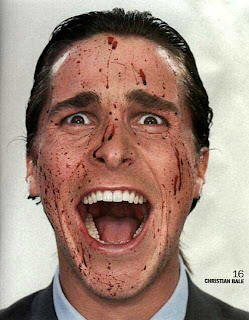
Speaking of which, apparently Christian Bale took inspiration from Tom for one of his finest roles. Can you guess which one? No, not Velvet Goldmine:


It was, in fact, AMERICAN PSYCHO. Quote:
And then one day he called me and he had been watching Tom Cruise on David Letterman, and he just had this very intense friendliness with nothing behind the eyes, and he was really taken with this energy


Seriously, it's just a matter of time before these guys appear on-screen together and have a psycho-off


I find it wonderfully perceptive of Christian Bale to have picked up on the idea of "superficial friendliness, but nothing behind the eyes". This is a common description used for genuine psychopathy, a subject I could never tire from studying. The awesome Jon Ronson's new book sees his customary humanistic approach applied to the weird and terrifying world of psychopaths:


Psychopathy is considered a dangerous personality disorder, and while my jaded friends who've worked at Broadmoor may scoff, I do still find it shocking on some level that instead of serving the sentence one is given for a corresponding crime, claim to be coo-coo and you could end up in an institution for the rest of your life. This is because while a transient psychotic episode may (rarely) lead an individual to commit a violent crime, a personality disorder obeys the three P's:

Persistent – consistent and inflexible pattern of coping over time

Pervasive – can be seen across different situations such as work, family and social relationships, and not just specific to offending

Problematic – has negative impact for themselves and/or others

What that means is that you ain't gon' change, son. Which means that nobody knows what to do with you, which means that only "preventative measures" can be taken as a viable solution for your care i.e. the most fun you'll ever have from now on is brewing prison wine (I don't know if they do this in Broadmoor, it just seemed like a good moment to reference an excellent blog).

What's mildly chilling is that the Biomedical model of mental illness (i.e. all things CBT and prescription meds related) has gradually adopted this same approach to illnesses well beyond the scope of personality disorder.

I'm fairly new to clinical research in mental health, having come from an Experimental Psychology background (which is NOT the same thing), but I still find it shocking to think that a major assumption within current approaches to mental illness is that underlying all disorders are stable, enduring traits that cannot be changed. These underlying "vulnerabilities", may then create a higher predisposition towards developing affective or psychotic disorders.

This stems from personality research, which is somewhat poo-pooed in Experimental Psychology, but has become a dominant feature of modern Psychiatry, and purports that concepts such as the Big Five are stable over time and predictive of all kinds of social outcomes, despite mixed evidence here and there...

Modern evidence-based therapies thus concentrate not on changing the person, but rather helping them come to terms with who they are (or what they have, depending on your narrative), and learning to accept themselves while adopt compensatory behaviours that will hopefully limit their suffering and that of those around them. I acknowledge that CBT is designed to change cognitions, but this is not the same as striving towards changing fundamental aspects of the self (a dangerous term that no self-respecting psychologist would use for fear of ridicule by the empirical community, but that psychoanalysts bandy about willy-nilly).

I can't find a good reference that discusses these various points directly, thus undermining my argument, but this article certainly broaches the topic indirectly in that it is now apparently hard to distinguish between mental illness and personality disorder in the current approach to mental health.


Obviously I'm massively generalising and what I'm saying is coming from someone who would very much like to enter the world of Psychiatry and become a practising clinician, so feel free to disregard/assassinate with logic.

It's also weird to think that a single academic's personality checklist has utterly dominated the field of psychopathy research for over 20 years.
In fact, as with many such things in academia, sadly, attempts to move the field forward are not always met with open arms.

Poorly referenced diatribes aside, I think I've gone quite off-track given that this all started with a funny video of someone doing an Aussie stereotype.

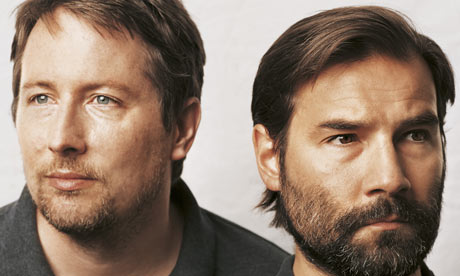
The video was actually made by Adam Buxton, one half of my fave comedy duo Adam and Joe, who sadly have ended their run of excellent podcasts (but have not been thrown in the bin/trash and forgotten about!).


No one understands our beardy man-love

Incidentally, the other, taller half of the duo, Joe Cornish, recently released his debut film Attack the Block, which I thought was very confidently directed and highly entertaining. I wonder whether the DVD release will suffer due to the recent London riots...(see my last post).

Ok, I've run out of steam, so I'll end by giving my Song Of the Day here.